Scope of Services
From single-provider clinics to large multi-specialty practices, Upscale Development Group handles the unique complexities of dental construction. We ensure your space is not only beautiful but functionally flawless.
- General Dentistry: Efficient operatories and sterilization centers.
- Oral Surgery: Med-gas capable surgical suites with recovery areas.
- Orthodontics: Open-bay concepts with specialized plumbing chases.
- Pediatric Dentistry: Themed environments and durable finishes.
Our Design-Build Process for Dental Practices
Dental office construction requires specialized knowledge that general contractors simply don't possess. At UDGOK, we've completed dozens of dental projects throughout the Tulsa metro area, giving us deep expertise in the unique requirements of dental construction. Our Design-Build approach provides a single point of contact from programming through practice opening.
Phase 1: Programming & Equipment Planning
Every successful dental construction project begins with understanding your equipment. We work with your dental equipment dealer—Henry Schein, Patterson, or Burkhart—to obtain precise rough-in specifications for each chair position. This includes water supply lines, drain connections, compressed air outlets, vacuum lines, and electrical requirements. Getting this information upfront prevents costly change orders during construction.
Phase 2: Space Planning & Workflow Design
Dental practices require careful attention to workflow efficiency. We help you design operatories that minimize staff walking distance, position sterilization away from patient areas, and create comfortable reception experiences. For Tulsa dental practices, we consider local demographics and your target patient base—whether that's families in Broken Arrow, professionals in downtown Tulsa, or pediatric patients in Owasso.
Phase 3: Design Development
Our architectural team develops detailed drawings including plumbing layouts, electrical plans, HVAC zoning, and equipment locations. For practices with X-ray equipment, we coordinate with a medical physicist to design proper radiation shielding. We also plan for future expansion—many Tulsa dental practices add operatories within 3-5 years of opening.
Phase 4: Construction & Installation
Our construction phase includes precise under-slab work for dental chair utilities, installation of compressed air and vacuum systems, medical gas piping for nitrous oxide and oxygen, and coordination of dental equipment installation. We maintain strict timelines because you lose revenue for every day your practice isn't seeing patients.
Phase 5: Equipment Calibration & Opening
Before you see your first patient, we coordinate equipment calibration with your dental dealer, verify all utility connections, and conduct final inspections. We provide training on building systems and warranty documentation.
Types of Dental Offices We Build
Tulsa's diverse dental market requires different facility types. We've built them all, from single-chair startup practices to large multi-specialty dental centers.
General Dentistry
General dental practices form the majority of our dental construction projects. These facilities typically include 4-8 operatories, a sterilization center, X-ray area, and reception/waiting. General dentistry build-outs in Tulsa range from 1,500 to 3,500 square feet. Key considerations include efficient operator layout, adequate plumbing for multiple chairs, and sufficient electrical capacity for X-ray equipment and compressors.
Pediatric Dentistry
Pediatric dental offices require special attention to child-friendly design elements while maintaining clinical functionality. We create themed waiting areas with engaging designs, child-sized dental chairs, and treatment rooms designed for parents to accompany their children. Durability is critical—pediatric practices see higher wear and tear. We specify commercial-grade finishes that withstand heavy use while maintaining a welcoming atmosphere.
Orthodontics
Orthodontic practices present unique construction requirements. The open-bay concept—where multiple patients receive treatment in a single large room—is common for braces adjustments and monitoring. This requires specialized plumbing chases to serve multiple chairs from central locations. We also plan for imaging rooms housing panoramic X-ray machines and 3D scanners that are essential to modern orthodontic treatment.
Oral Surgery & Periodontics
Surgical dental practices—oral surgeons and periodontists—require the most complex construction. These facilities need surgical suites with full anesthesia capabilities, including medical gas systems for oxygen and nitrous oxide, recovery rooms, and advanced HVAC to maintain sterile environments. We handle the specialized permitting required for surgical facilities and coordinate with medical gas certification authorities.
Multi-Specialty Dental Centers
Large dental facilities serving multiple specialties under one roof are increasingly popular in Tulsa. These 5,000+ square foot facilities combine general dentistry, pediatric, orthodontics, and sometimes oral surgery. They require complex MEP systems capable of serving varied equipment loads and specialized areas. Our experience with these projects means we understand how to design flexible infrastructure that adapts as tenant needs change.
Dental Office Construction Costs
Understanding dental construction costs helps you budget accurately. Based on recent Tulsa-area projects, here's what to expect:
Cost Per Square Foot
Dental office construction in the Tulsa metro area ranges from $140 to $220 per square foot for interior build-outs. Ground-up construction runs higher, typically $180-280 per square foot. The wide range reflects differences in finish level, equipment complexity, and medical gas requirements.
Major Cost Factors
Number of Operatories: Each chair position requires approximately $8,000-15,000 in under-slab plumbing and electrical infrastructure. A 6-chair practice will have $50,000-90,000 in utility rough-in alone.
Equipment Level: Digital X-ray sensors, 3D imaging (CBCT), and CEREC mills require specialized electrical and network infrastructure. Budget $15,000-50,000 for imaging room construction.
Medical Gas Systems: Practices offering sedation require certified medical gas installation—typically $15,000-40,000 depending on the number of outlets.
Finishes: Waiting areas with high-end finishes, spa-like amenities, and branded interiors add $30-75 per square foot to base construction costs.
Cost-Saving Strategies
We help Tulsa dental practices control costs through value engineering during design. Selecting a former retail space with good ceiling height and accessible utilities can save $30-50 per square foot versus building out a former warehouse. We also recommend phasing certain improvements—many practices open with 4 operatories and add 2 more within 18 months using reserved electrical and plumbing capacity.
Dental-Specific Infrastructure
Dental offices require specialized infrastructure that most commercial contractors don't understand. Our team has installed hundreds of dental chair utility connections.
Dental Compressed Air Systems
Dental chairs and handpieces require oil-free, dry compressed air. We install dental air compressors with desiccant dryers that remove moisture to protect sensitive handpiece bearings. Compressor rooms require sound isolation—our designs place compressors in utility rooms away from patient care areas to maintain a quiet, professional environment.
Dental Vacuum Systems
High-volume evacuation (HVE) systems remove water, saliva, and debris during procedures. These require dedicated 2-inch or larger drain lines with proper venting. We design vacuum systems with appropriate capacity for your number of chairs—under-sizing causes poor suction and patient complaints.
Water Lines & Filtration
Dental units require dedicated water lines with filtration to protect patient safety. We install whole-office water filtration systems that meet CDC guidelines for dental water quality. This includes ultraviolet sterilization and regular filter changes—design considerations that protect your practice from liability.
Electrical & Data Infrastructure
Modern dental practices require robust electrical and data infrastructure. We plan for dedicated circuits for X-ray equipment (which can draw 30+ amps during exposure), network cabling for digital imaging systems, and backup power for equipment protection during Tulsa's occasional power outages.
Radiation Shielding & X-Ray Rooms
Dental X-ray equipment requires proper radiation shielding to protect staff and patients. We handle all aspects of X-ray room construction.
Radiation Physics Consultation
We coordinate with licensed radiation physicists who calculate shielding requirements based on your equipment type, room dimensions, and adjacent space usage. The physicist prepares formal shielding plans that we submit to the Oklahoma Department of Environmental Quality (DEQ) for approval.
Lead-Lined Wall Construction
X-ray rooms typically require lead-lined drywall (1/16" to 1/8" lead equivalent) on walls, ceilings, and doors. We install lead-lined drywall with proper overlapping joints—the most critical installation detail. Improperly installed shielding can lead to regulatory violations and potential liability.
Lead Glass Windows
Operator stations require leaded observation windows allowing staff to monitor patients during X-ray exposure. We coordinate lead glass ordering with lead times—custom sizes take 2-3 weeks. Proper framing installation is critical to maintain shielding integrity at window edges.
Digital X-Ray Integration
Digital X-ray sensors and phosphor plate scanners have different infrastructure requirements than traditional film. We work with your equipment vendor to ensure proper network connectivity, electrical grounding, and workstation placement for digital imaging workflow.
Recent Dental Construction Projects
Our portfolio demonstrates experience across all dental specialty types in the Tulsa metropolitan area.
South Tulsa Family Dental
Project Size: 3,200 square feet
Completion: 2024
Scope: Complete build-out of general dentistry practice with 6 operatories, digital X-ray room, and sterilization center. Fast-track schedule completed in 14 weeks. Challenge included fitting complex plumbing in a former retail space with limited ceiling access.
Owasso Pediatric Dentistry
Project Size: 2,800 square feet
Completion: 2024
Scope: Child-friendly dental practice featuring themed treatment rooms, play area in waiting room, and child-scale equipment. Design incorporated bright colors and fun elements while maintaining clinical functionality. Parents particularly appreciated the separate reception for sick children.
Broken Arrow Orthodontics
Project Size: 4,100 square feet
Completion: 2023
Scope: Large orthodontic facility with 8-chair open bay area, 2 X-ray/imaging rooms, and dedicated sterilization. Installed centralized compressor and vacuum systems serving multiple chair positions. Project included CBCT room with specialized radiation shielding.
Mini-Portfolio
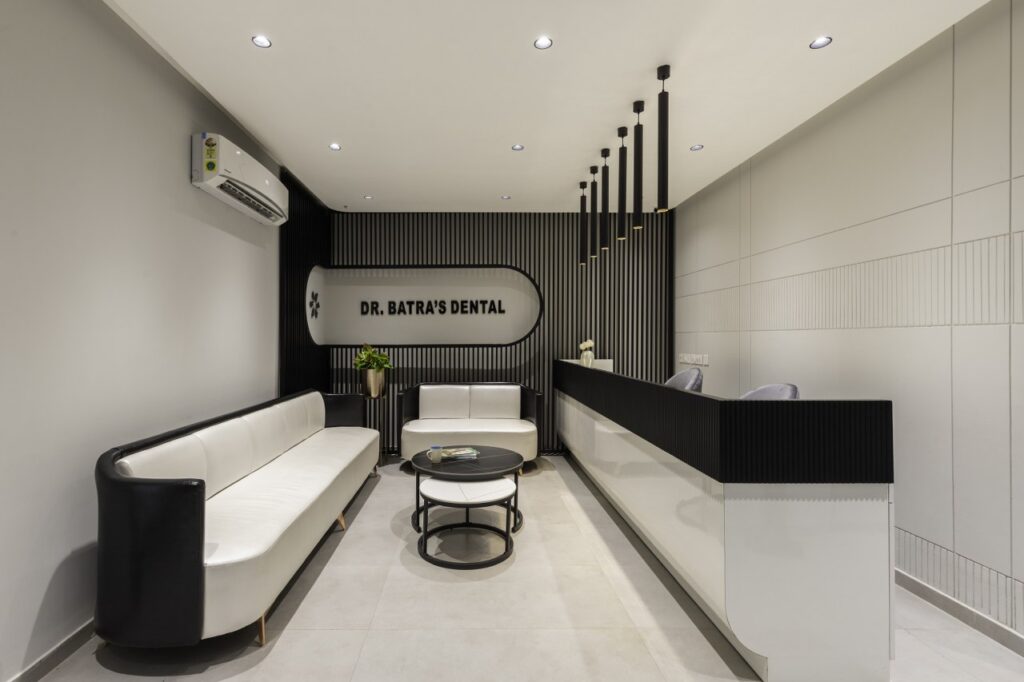
Modern Waiting Area
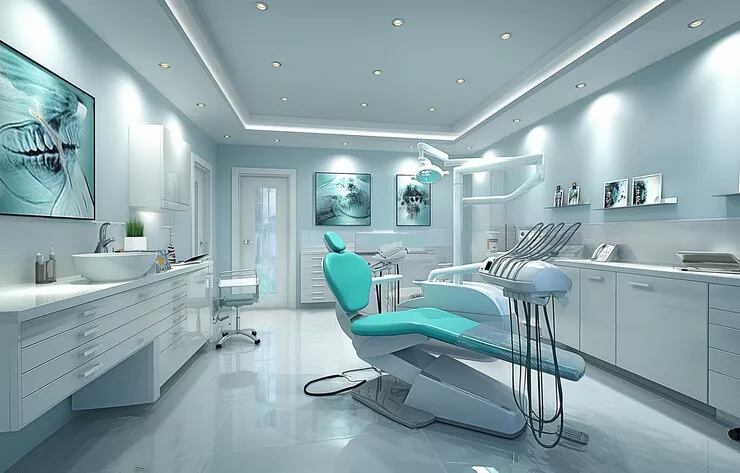
Blue Treatment Suite
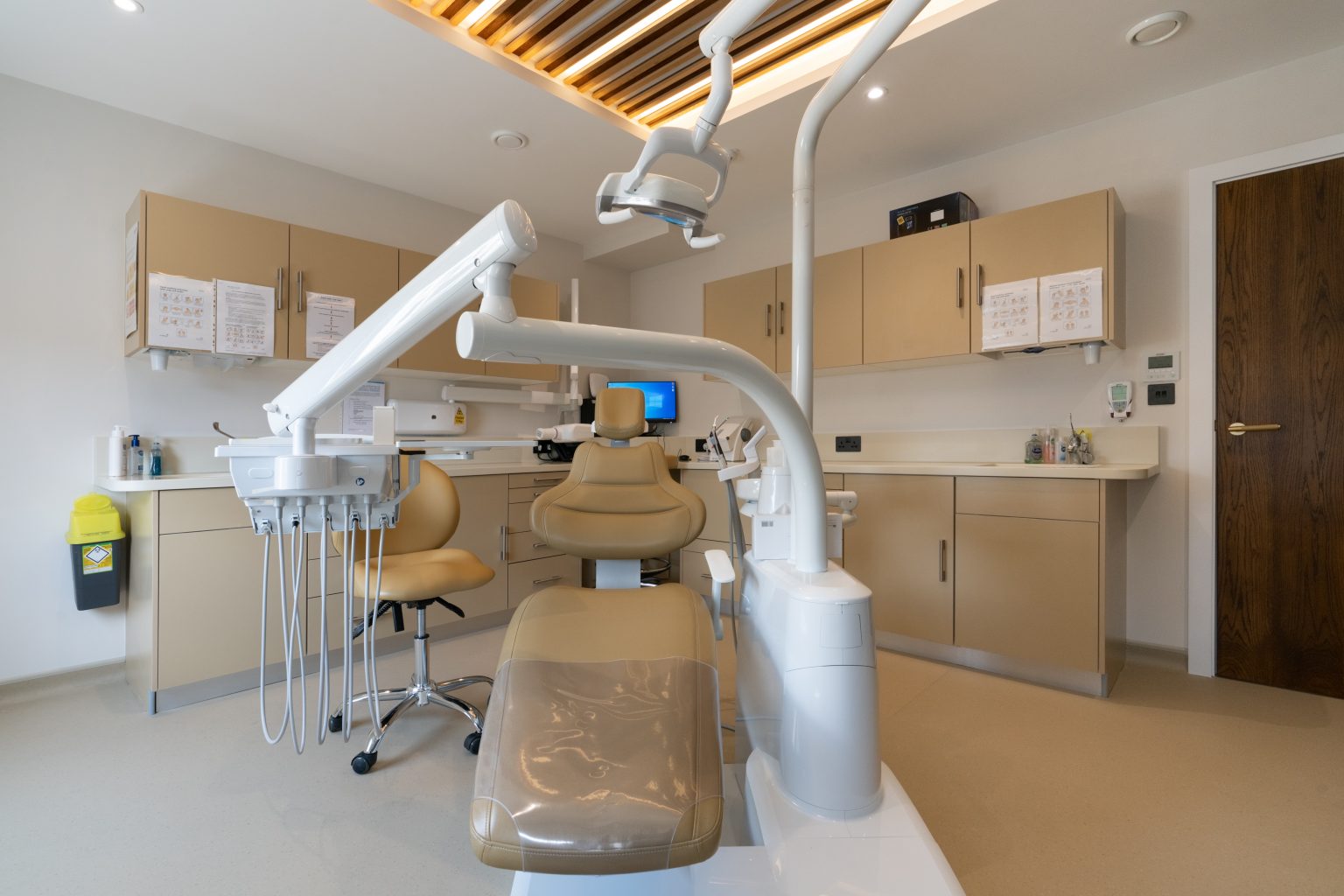
Surgical Operatory
Constraints & Cost Drivers
Dental offices are infrastructure-intensive. Key cost drivers include:
1. Under-Slab Plumbing: Requires precise trenching for water, suction, and compressed air to every dental chair. Accuracy is critical—being off by an inch can ruin the chair installation.
2. Electrical Loads: High amperage requirements for X-rays, compressors, vacuums, and sterilization equipment (autoclaves).
3. Medical Gas (Nitrous/Oxygen): For oral surgery, copper piping must be brazed and certified by licensed installers.
4. Cabinetry: Dental-specific cabinetry (center islands, 12 o'clock units) is often a major budget item.
Permitting & Radiation
In Tulsa and surrounding areas, dental offices with X-ray units must comply with specific regulations. We handle the submission of shielding plans (prepared by a physicist) to verify that walls have adequate lead lining to protect staff and patients.
Frequently Asked Questions
Yes, we work directly with Henry Schein, Patterson, and Burkhart reps to ensure rough-ins match their templates.
We use certified medical gas installers to run copper lines and perform required pressure tests and certifications.
Typically 12-16 weeks for a standard 3,000 sq. ft. office, depending on permit approval times.
Yes, we install lead-lined sheetrock or lead sheets in walls surrounding X-ray units as specified by your physicist.
Yes, we can phase construction and work after hours to minimize downtime for your practice.
Yes, we install amalgam separators on the suction lines to comply with EPA dental effluent guidelines.
We recommend LVT (Luxury Vinyl Tile) or sheet vinyl for durability and ease of cleaning.
Yes, our design-build team can create efficient floor plans that maximize the number of operatories.